Summary
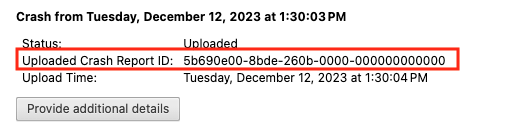
Brave has been crashing repeatedly with EXC_BAD_ACCESS (SIGSEGV) on the main thread. A total of 7 crashes have occurred over the past 10 days, with 2 crashes happening today (June 30, 2026). The timing coincides with recent macOS and Chromium 149 security updates.
Environment
- Brave Version: 149.1.91.180 (191.180)
- OS: macOS 26.5.2 (build 25F84), macOS Tahoe
- Hardware: Mac16,12 (Apple Silicon, ARM-64)
- System Integrity Protection: Enabled
- Crash Frequency: 7 crashes over the last 10 days, 2 of which occurred today
Crash Details
Process:             Brave Browser [971]
Identifier:          com.brave.Browser
Version:             149.1.91.180 (191.180)
Code Type:           ARM-64 (Native)
Triggered by Thread: 0  CrBrowserMain, Dispatch Queue: com.apple.main-thread

Exception Type:    EXC_BAD_ACCESS (SIGSEGV)
Exception Subtype: KERN_INVALID_ADDRESS at 0xefefefefefefefef
Exception Codes:   0x0000000000000001, 0xefefefefefefefef
Termination Reason: Namespace SIGNAL, Code 11, Segmentation fault: 11

VM Region Info: 0xffffefefefefefef is not in any region.
Analysis
The crash address 0xefefefefefefefef is a PartitionAlloc freed-memory poison pattern used by Chromium’s memory allocator. When memory is freed, the allocator fills it with 0xEF bytes to aid in detecting use-after-free bugs. The crash indicates that:
- An object was allocated and subsequently freed (filled with
0xEF). - A dangling pointer to the freed object was dereferenced.
- The poisoned pointer value (
0xefefefefefefefef) was treated as a memory address. - The address is unmapped, triggering a
SIGSEGVon the main thread (CrBrowserMain).
This is consistent with a use-after-free vulnerability in the Chromium 149 codebase.
Potential Connection to Chrome 149 Security Patches
Google released a Chrome 149 security update around June 25–26, 2026, patching 18 vulnerabilities — including 10 use-after-free flaws (reported by Forbes and SecurityWeek). If Brave 149.1.91.180 does not yet incorporate these upstream patches, the same use-after-free bugs would still be present.
The most recent macOS 26.5.2 update (released June 29) included security fixes, some WebKit-related. While Brave uses Chromium’s Blink engine (not WebKit), system-level changes can alter memory allocation timing and behavior, potentially affecting how often an existing use-after-free bug triggers.
Steps Already Taken
- Updated macOS to 26.5.2 (issue persists)
- No new extensions installed recently
- No changes to browsing habits
Questions for the Team
- Does Brave 149.1.91.180 include the Chromium 149 security patches from late June 2026?
- Is there a newer Brave build available or upcoming that merges these fixes?
- Are there any known workarounds (e.g., disabling hardware acceleration) to reduce crash frequency in the interim?
- Is additional crash log information needed? I can provide full crash reports via
brave://crashes.
Full Crash Report
Available upon request. Key fields included above; happy to share the complete .crash file if helpful.